The Secret-Cabin-et
Reading Room
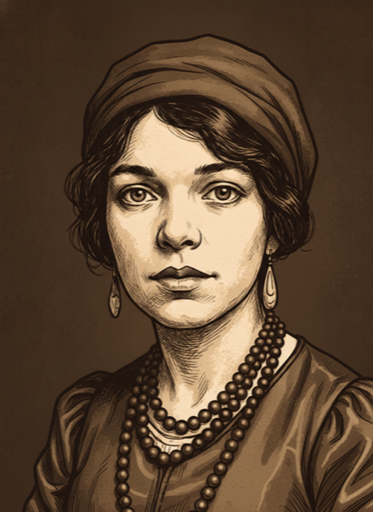 Pamela Colman Smith
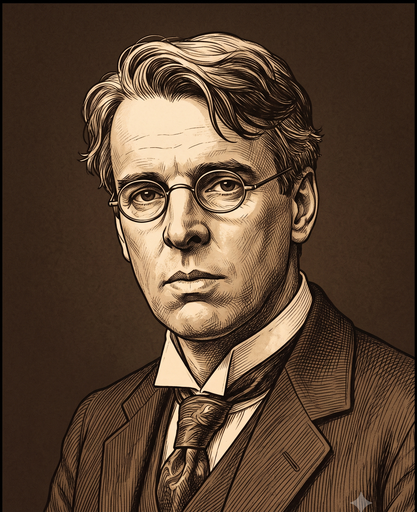 William Butler Yeats
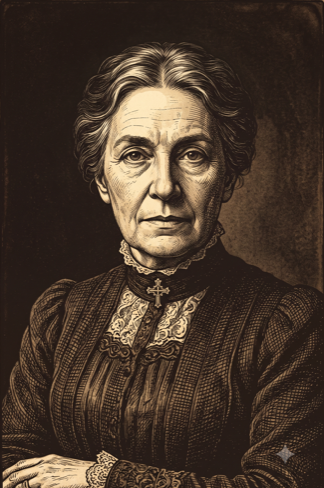 Moina Mathers
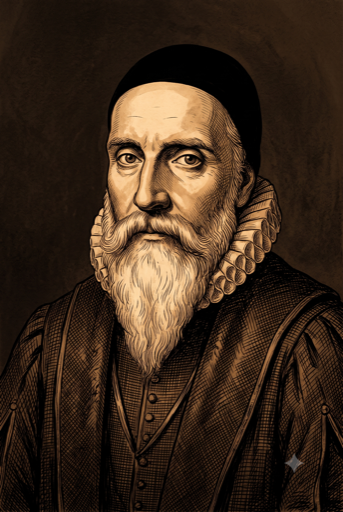 John Dee
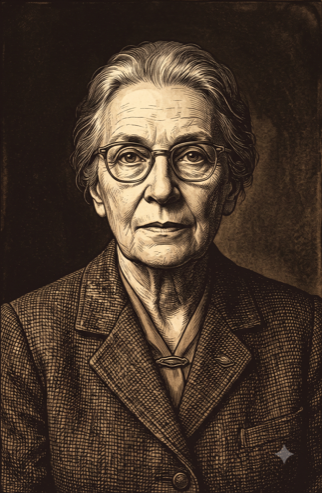 Frances Yates
The Tarot embodies symbolical presentations of universal ideas, behind which lie all the implicits of the human mind, and it is in this sense that they contain secret doctrine, which is the realization by the few of truths embedded in the consciousness of all. The cards are a work of art — I say this carefully — and a work of doctrinal art, which is something rarer.
The designs of the present pack have been prepared under my supervision and in accordance with the knowledge that I possess concerning the true meanings. They differ in many material respects from anything which has appeared previously in works on the Tarot. The pictures of the greater trumps have been entirely redrawn, and I believe, for the first time in the history of this subject, every card in the pack has received full pictorial treatment. This was possible because the artist who gave form to my design — Miss Pamela Colman Smith, whose name deserves to stand beside the work she has produced — brought to her task not only skill and trained imagination, but an occult sympathy that is, in my experience, uncommon among professional draughtswomen.
I must add only this: the meanings here given belong to the exoteric tradition of cartomancy, which is not the same as the esoteric doctrine of the symbols. The student who has received real initiation will look at these cards differently — will see in the Fool, for example, not a figure of folly, but a figure of spiritual detachment of the highest order. The surface meanings are offered in good faith; the deeper meanings are for those who have eyes already opened.
John Dee
I have sat with the notion of "eyes already opened" for a long time, and I confess I have never known how to test it. A cipher I can test — I set the key against the text and the plaintext resolves or it does not. Initiation offers no such check. Two students look at the Fool; one sees folly, one sees detachment of the highest order; both report certainty. I do not doubt either report. I doubt the method that produces two irreconcilable certainties and calls the difference an achievement.
Moina Mathers
Dee, you test a cipher because a cipher was built to be tested — that is its whole nature. A card is not a cipher. It is a chair someone has to actually sit in. I designed the Golden Dawn diagrams myself, and I never once asked whether two initiates would agree on what Tiphareth meant to them. I asked whether the ritual built around the symbol produced the state it was built to produce. Waite's "eyes already opened" is not a claim about consensus. It is a claim about whether the machinery works when the hand that built it built it honestly. That much I can test. Pamela's hand, incidentally, was honest — I would know that difference in a stranger's deck before I trusted a word he wrote about it.
Frances Yates
The word that stops me is "true," Moina — not "meanings," "true." Waite writes as though he is restoring an ancient doctrine that the exoteric tradition merely corrupted. Michael Dummett established, with Sylvia Mann and Ronald Decker later completing the archive in A Wicked Pack of Cards, that no esoteric content attaches to these cards before Court de Gébelin's Le Monde Primitif in 1781 — the Visconti-Sforza trionfi of the 1440s are a card game, nothing more, and the Egyptian origin is Gébelin's invention, not a rediscovery. Waite knows this history better than most; he is not naive. So the "secret doctrine" he protects is not older than the cards' occult reading — it is exactly as old, and he is doing what Bruno did with the art of memory: building a total structure and then locating its authority in a past that never held it. That does not make Pamela's cards less real. It makes the claim of antiquity the actual artifice.
Moina Mathers
Frances, I don't need the doctrine to be old to trust the deck — that was never my test. Waite can invent an ancestry for the Fool going back to Memphis for all I care; Gébelin's fraud is his problem, not Pamela's. What I asked was narrower and stays standing after your point lands: did the hand that drew the Hanged Man understand what it was drawing, or was it copying a shape it had been told meant something. Antiquity is a costume. Craft is not. Waite dressed his cards in a lineage that never existed — fine, half this room has done the same to its own authority, myself included. But the water flowing upward past the branches in her Ten of Wands is not Gébelin's forgery. That she saw.
Frances Yates
That is exactly the distinction I want, and I'll take the correction — costume against craft is cleaner than what I said. But notice what you've just done, Moina: you've relocated the authority from the lineage to the hand, and that is precisely the move the Renaissance magus makes when the old authority stops holding. Bruno couldn't cite an unbroken Hermetic transmission either, not truly, once you press on it — Isaac Casaubon had dated the Corpus Hermeticum to the Christian era by 1614, decades after Bruno was ash. What survived wasn't the lineage. It was the conviction plus the workmanship. I only insist Waite's fraud be named because the pattern is worth seeing whole, not because it damns the deck.
Yeats
Frances, you keep finding the fraud beneath the structure and calling it artifice, as though the discovery discredits the house. I have built enough houses on borrowed foundations to know it does not follow. Bruno's authority collapsed under Casaubon's dating and Bruno's cosmology did not collapse with it — the conviction outlived the genealogy because the genealogy was never load-bearing. It was scaffolding, taken down once the building stood. Waite's Egypt is scaffolding of that kind. What stands is the card. And the Fool interests me precisely because he is the unnumbered thing — not folly, not detachment either really, but the soul that has stepped clear of the Wheel altogether, out past the antinomies the rest of the trumps are still fighting inside. Every other trump argues with its opposite. The Fool has no opposite. That is not a doctrine Waite invented and it is not one Pamela merely illustrated on commission — I have seen her line before this deck, in the theatre work, the folding, weightless line that does not argue, only shows. She drew the one card in that pack that could not be reduced to instruction. I don't think that was Waite's do
Coleman-Smith
He's not stepping off the cliff, Yeats — look again. The foot's still in the air. That's the whole card. Not the leap, not the doctrine after the leap — the half-second where he hasn't committed yet and the little dog already has his opinion about it. I drew that because I've stood in doorways on stage not knowing myself whether I was making an entrance or leaving. Waite gave me "spiritual detachment." I gave him a man who hasn't decided. Those aren't the same instruction. Only one of us was in the room with the foot.
Yeats
Not his doctrine — no. Mine, perhaps, dressed as his. I said stepped clear of the Wheel because that is the shape my system needed there, and you have just shown me the foot still hasn't landed. That is a truer card than the one I was describing. I have done this before, given a fixed word to a thing that was still deciding itself. I am not always told so plainly.
The room draws breath.